


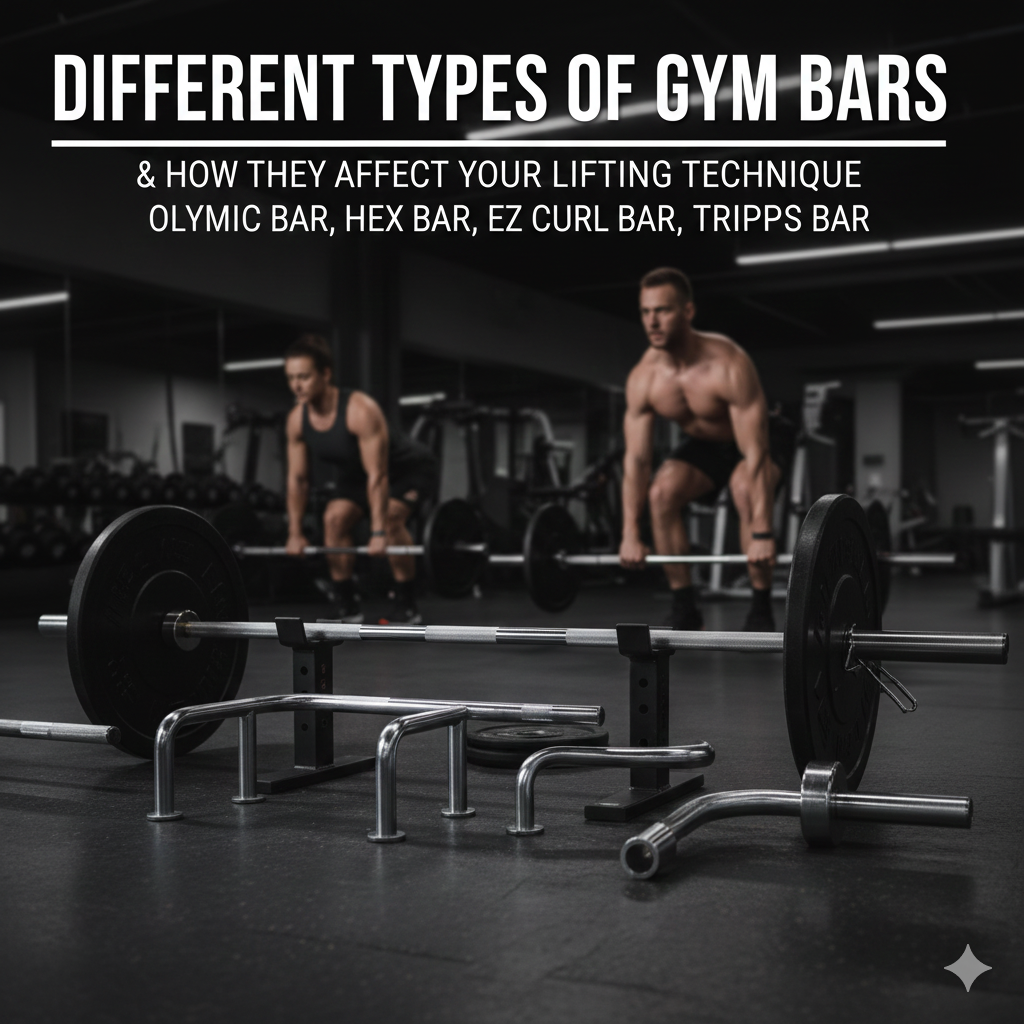
Different Types of Gym Bars & How They Affect Your Lifting Technique
Posted on: 29 Nov, 2025
Weightlifting isn’t just about strength—it’s about using the right equipment to maximize performance, avoid injuries, and improve technique. One of the most important pieces of gym equipment is the gym bar or weight lifting bar. Each type of bar is designed for a specific purpose, workout style, and muscle engagement.
In this guide, we’ll break down the different types of gym bars and explain how each bar affects your lifting technique, so you can make the right choice for your fitness goals.
1. Olympic Barbell
The Olympic bar is the most commonly used bar in gyms.
Features:
- 20kg for men, 15kg for women
- 7ft length
- Rotating sleeves
- High weight capacity
How It Affects Technique:
- Smooth rotation reduces wrist strain
- Ideal for explosive lifts like snatch & clean
- Encourages full-body engagement
Perfect for advanced lifters and strength training.
2. Standard Barbell
A simpler version of the Olympic bar.
Features:
- Smaller diameter
- Fixed sleeves
- Lighter weight
Technique Impact:
- Good for beginners
- Better for basic lifts like curls, squats, and bench press
- Encourages controlled movement rather than speed-based lifting
Ideal for home workouts and moderate training.
3. EZ Curl Bar
Known for its curved, zig-zag design.
Features:
- Angled grip
- Shorter length
- Lightweight
Technique Impact:
- Reduces wrist stress during curls
- Enhances isolation of biceps and triceps
- Ideal for preacher curls, skull crushers, and close-grip extensions
A must-have bar for arm-focused workouts.
4. Hex Trap Bar
A hexagonal bar that you stand inside.
Features:
- Dual handles
- Balanced weight distribution
- Heavy lifting capability
Technique Impact:
- Reduces lower back strain
- Encourages perfect deadlift form
- Allows more leg engagement and safer lifts
Perfect for beginners and athletes to practice deadlifts safely.
5. Straight Bar (Short Bar)
A compact version of a standard barbell.
Features:
- Shorter length
- Comfortable grip
- Ideal for small spaces
Technique Impact:
- Great for controlled, isolated movements
- Perfect for curls, presses, rows, and front raises
- Helps improve muscle isolation due to compact design
- Best for home gym setups.
6. Swiss / Multi-Grip Bar
A bar with several neutral grip handles.
Features:
- Multiple grip positions
- Reduces joint stress
- Versatile for many exercises
Technique Impact:
- Promotes natural wrist alignment
- Great for those with shoulder pain
- Enhances triceps and chest activation during presses
Excellent for lifters with mobility issues.
7. Safety Squat Bar
A bar with padded shoulders and angled handles.
Features:
- Cushioned neck support
- Forward-facing handles
- Thick, curved design
Technique Impact:
- Improves squat depth
- Reduces shoulder and wrist strain
- Keeps torso more upright
Great for beginners and injury-prone lifters.
8. Deadlift Bar
Designed specifically for heavy deadlifts.
Features:
- Longer and more flexible
- Aggressive knurling
- Great whip (bend)
Technique Impact:
- Allows a more powerful pull
- Better bar bend increases leverage
- Helps achieve stronger lockouts
Perfect for powerlifters.
Why Choosing the Right Bar Matters
Different bars affect your:
- Grip comfort
- Wrist alignment
- Muscle activation
- Lifting power
- Injury prevention
- Training style
Selecting the correct weight bar ensures better progress and safer workouts.
Why Koxtons Gym Bars Are Trusted
Koxtons offers premium-quality bars designed for:
- Home gyms
- Commercial fitness centers
- CrossFit boxes
- Professional lifting setups
Built with durable steel, strong knurling, accurate weight distribution, and long-lasting coating—perfect for all levels of lifters.
Conclusion
Using the right gym bar can dramatically improve your lifting technique, strength progression, and workout safety. Understanding the purpose of each bar helps you choose the best equipment for your training style and fitness goals.
Recent Posts
-
 KX-10008 Table Tennis Table (Club Series) 30 Mar, 2026
 -
-
-

Comments
No comment yet.