


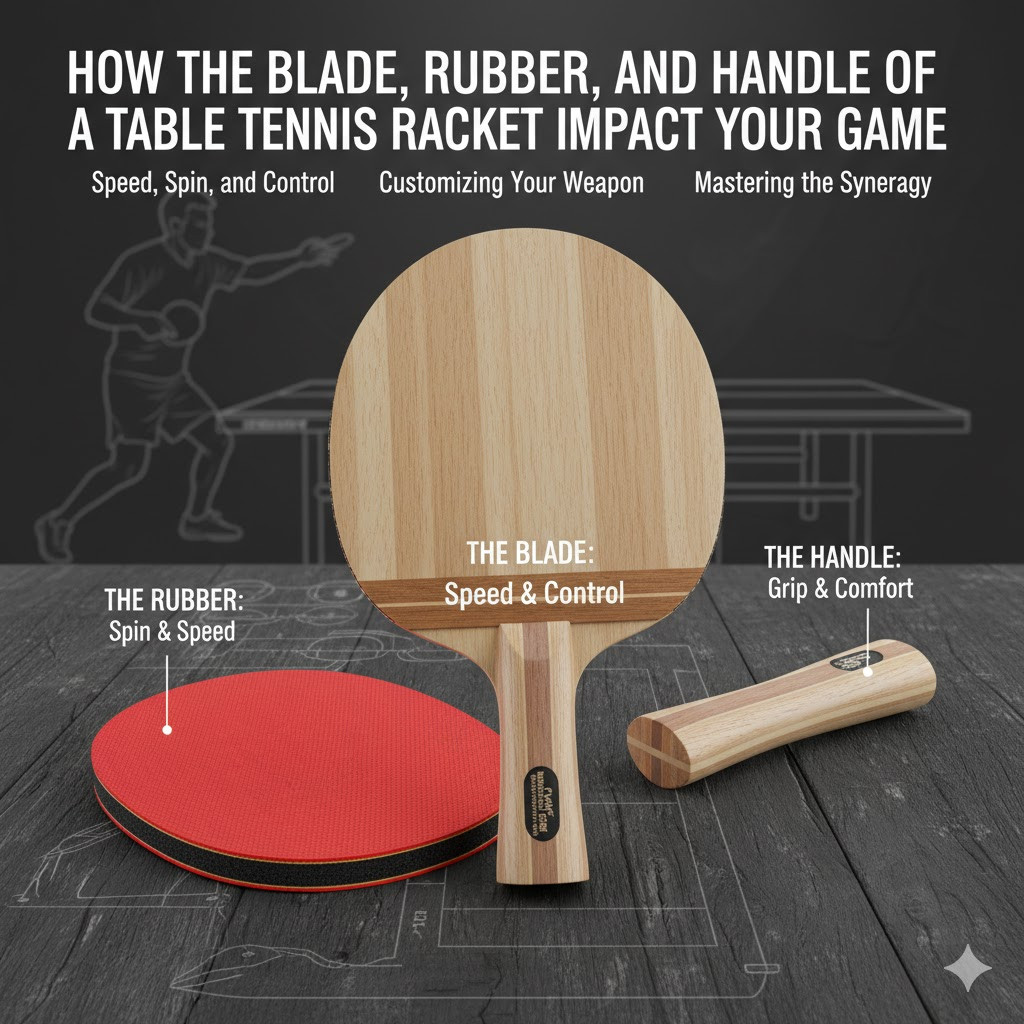
How the Blade, Rubber, and Handle of a Table Tennis Racket Impact Your Game
Posted on: 14 Oct, 2025
Every serious table tennis player knows that a Table Tennis Racket isn’t just a piece of equipment—it’s the key to mastering spin, speed, and control. The performance of your TT racket depends on three essential components: the blade, rubber, and handle.
Each part plays a unique role in how the ball reacts, how much spin you can generate, and how comfortable you feel during play. In this blog, we’ll break down how these components impact your game and how to choose the perfect combination for your playing style.
1. The Blade: The Heart of the Table Tennis Racket
The blade is the wooden part of the racket and forms its base structure. It’s the foundation that determines your speed, control, and overall playing feel.
How It Impacts Your Game:
- Speed: A blade made of harder wood or with carbon layers offers more power and faster shots. Perfect for attacking players.
- Control: Softer, all-wood blades provide better control and precision, ideal for defensive or all-round players.
- Vibration & Feel: The type of wood and number of plies affect how much vibration you feel in your hand. More plies mean stiffer blades and faster shots; fewer plies mean more touch and control.
Types of Blades:
- All-Wood Blades: Provide excellent ball feedback and control.
- Carbon or Composite Blades: Add power and reduce vibration for a faster, aggressive game.
2. The Rubber: Spin, Speed, and Control Master
The rubber is the most crucial surface of your Table Tennis Racket, where the ball makes direct contact. It determines your spin, speed, and playing style.
How Rubber Impacts Your Game:
- Spin: Softer, tacky rubbers help generate more spin, especially for loopers and spin attackers.
- Speed: Harder rubbers with sponge layers give you more speed but less dwell time.
- Control: Balanced rubbers offer a mix of both—good for beginners and all-round players.
Rubber Types:
- Inverted Rubber: The most common type, with a smooth surface for high spin and control.
- Short Pips: For fast, flat shots and quick blocking.
- Long Pips: Used by defensive players for unpredictable spin returns.
- Anti-Spin: Reduces opponent’s spin, perfect for defensive strategy.
3. The Handle: Comfort and Control in Your Grip
Often overlooked, the handle is what connects you to your TT racket. The shape and size of the handle impact how well you control the racket during quick movements and rallies.
Types of Handles:
- Flared Handle (FL): Wider at the base, perfect for players who prefer strong forehand grips.
- Straight Handle (ST): Same width throughout—offers flexibility for quick grip changes.
- Anatomic Handle (AN): Ergonomically shaped to fit naturally in your hand, ensuring better comfort and control.
How Handle Impacts Your Game:
- The right handle improves your grip stability and stroke consistency.
- Helps maintain better control during fast rallies.
- Reduces fatigue and provides better comfort for long matches.
4. Choosing the Right Combination for Your Playing Style
Every player has a different playing style, and your Table Tennis Racket should reflect that.
For Attackers (Offensive Players):
- Use a carbon blade for speed.
- Pair with harder, fast rubbers for explosive attacks.
- Flared or straight handle for strong forehand play.
For Defenders:
- Choose a soft, all-wood blade for control.
- Combine with tacky or anti-spin rubbers to manage opponent’s shots.
- Anatomic handle for precision and balance.
For All-Round Players:
- Go for a balanced blade with medium speed and control.
- Use rubbers that allow both spin and consistency.
- A flared handle works well for versatility.
5. Maintenance and Care for Your Table Tennis Racket
Once you’ve found your perfect TT racket, keeping it in good condition ensures long-lasting performance.
Simple Maintenance Tips:
- Clean your rubbers regularly with a damp sponge to remove dust and sweat.
- Store your racket in a protective case to avoid damage.
- Avoid extreme heat or moisture, as it can warp the blade and affect performance.
- Replace rubbers every 3–6 months if you play regularly.
Conclusion
Understanding the blade, rubber, and handle of a Table Tennis Racket is key to improving your game. Each component affects how you strike, control, and spin the ball. Whether you’re a beginner or a professional, choosing the right setup helps you play with confidence and precision.
At Koxtonsmart.com, you’ll find high-quality Table Tennis Rackets designed for every skill level. From all-round control to offensive power, our rackets combine precision engineering with lasting performance.
Play smart. Play strong. Play with Koxtonsmart.
FAQs
Q1: Which blade is best for beginners?
A: Beginners should go for an all-wood blade that offers better control and feedback.
Q2: How often should I replace my table tennis rubber?
A: Replace rubbers every 3–6 months, depending on usage and playing frequency.
Q3: What handle type do professional players use?
A: Most professionals use flared handles, as they provide a firm grip and comfort.
Q4: Can I customize my table tennis racket setup?
A: Yes! Many players choose custom setups with their preferred blade and rubber combination for personalized performance.
Q5: Does the racket weight matter?
A: Absolutely. Lighter rackets offer faster swing speed, while heavier ones provide more power. Choose what feels balanced for your play style.
Recent Posts
-
 KX-10008 Table Tennis Table (Club Series) 30 Mar, 2026
 -
-

-


Comments
No comment yet.