


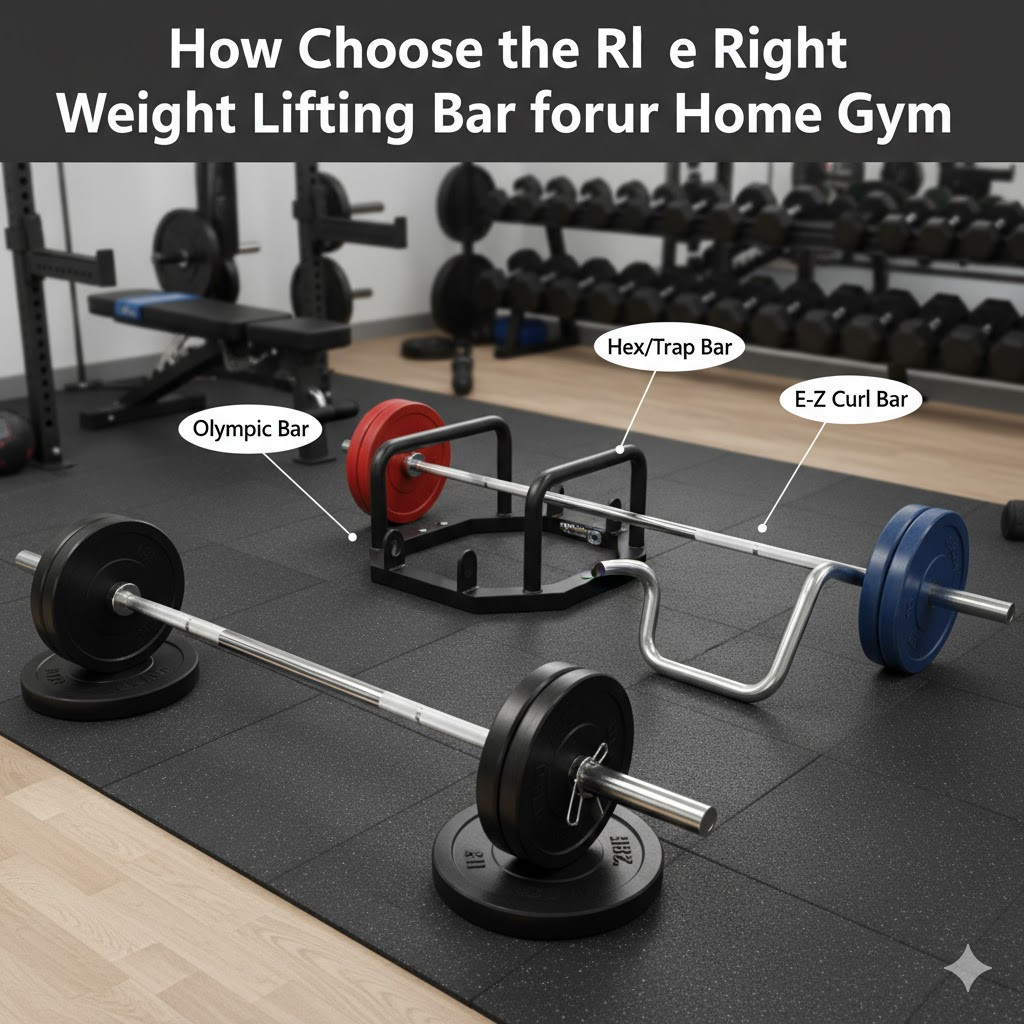
How to Choose the Right Weight Lifting Bar for Your Home Gym
Posted on: 29 Oct, 2025
How to Choose the Right Weight Lifting Bar for Your Home Gym
Setting up a home gym means choosing equipment that supports your training goals, and one of the most important pieces is the weight lifting bar. The right bar can improve your form, enhance strength progression, and make your workouts safer and more efficient. But with different types and sizes available, choosing the right one can feel overwhelming. This guide will help you understand what to look for when selecting a bar that fits your needs and training environment.
1. Know Your Training Purpose
Before choosing a bar, think about how you plan to use it.
If you're mainly performing exercises like squats, bench presses, deadlifts, and overhead presses, a standard weight lifting bar will work perfectly.
For dynamic movements like clean & jerk or snatch, you may prefer a bar with better flexibility and smooth rotation. Your training intention directly affects the bar style you should select.
2. Consider Bar Length and Space
Bar length matters, especially for home gyms. A typical 7ft bar is great for full-body strength training and heavier loads.
However, if you have limited space, a 5ft or 6ft bar can be easier to maneuver while still supporting most basic exercises.
Choose the size that fits both your workout style and your available space.
3. Grip and Knurling Comfort
The textured pattern on the bar, called knurling, gives you grip.
- Light knurling = comfortable for beginners
- Medium knurling = secure grip without discomfort
- Aggressive knurling = suited for experienced heavy lifters
For home workouts, medium knurling strikes the best balance between comfort and stability.
4. Weight Capacity and Durability
Always check the bar’s weight capacity. If your goals include progressive strength training, choose a bar that can support heavier weights without bending. A high-quality steel bar ensures better durability and long-term training support.
5. Bar Material and Finish
A good protective finish like chrome or black oxide prevents rust and improves grip feel. The finish you choose affects:
- Comfort
- Maintenance
- Longevity
Go for a bar that feels comfortable in your hands and suits regular usage.
6. Pair with Compatible Weight Plates
Your bar must match the inner diameter of the weight plates.
For best workout experience, choose weight plates designed to fit smoothly and securely.
You can explore Weight Lifting Bars and match them with suitable plates here:
- Weight Lifting Bars → Koxtons Weight Lifting Bars
- Weight Plates → Koxtons Weight Plates
- Weight Bench → Koxtons Weight Bench
7. Why Koxtons Weight Lifting Bars Are Trusted
Koxtons offers weight lifting bars designed with balanced flexibility, strong steel structure, and comfortable knurling. Whether you're building your first home gym or upgrading equipment, Koxtons ensures durability and performance for all training levels.
Conclusion
Choosing the right weight lifting bar helps improve training quality and prevents injury. Consider your training goals, available space, grip comfort, and plate compatibility. Invest in a bar that supports your progress today and tomorrow.
A good bar isn’t just equipment — it's your training partner.
FAQs
Q1: Which weight lifting bar is best for beginners?
A1: Beginners should start with a standard 5ft or 6ft weight lifting bar with medium knurling. It’s easier to control and comfortable for learning correct form.
Q2: What is the difference between a standard bar and an Olympic bar?
A2: A standard bar is lighter and ideal for basic strength training, while an Olympic bar is heavier, longer, and offers better flexibility and sleeve rotation for advanced lifts.
Q3: How much weight should a good weight lifting bar support?
A3: A good bar for home use should support at least 150–200 kg. If you plan to lift heavy over time, choose a bar with higher load capacity.
Q4: Can I use the same bar for squats, bench press, and deadlifts?
A4: Yes, a well-balanced standard or Olympic bar can be used for all major compound lifts, making it versatile for a home gym setup.
Q5: Do I need specific weight plates for my bar?
A5: Yes, weight plates must match the bar’s sleeve diameter. Be sure to choose plates designed to fit your bar for safe and smooth lifting.
Recent Posts
-
 KX-10008 Table Tennis Table (Club Series) 30 Mar, 2026
 -
-
-

Comments
No comment yet.