


How TT Balls Are Priced: A Deep Dive Into Quality, Testing & Standards
Posted on: 01 Dec, 2025
When you pick up a table tennis ball, it looks simple—small, light, and made of plastic. But behind every TT ball’s price lies an entire world of manufacturing standards, strict quality tests, and performance ratings. Whether you’re a beginner, club-level player, or advanced tournament competitor, understanding how TT balls are priced can help you choose the right one for your game.
Let’s take a deep dive into what actually determines the cost of a table tennis ball.
1. Material Quality: The First Factor Behind Price
Modern TT balls are made from ABS plastic, which offers better durability and consistent bounce.
However, not all ABS materials are the same.
Higher-quality materials =
✔ better roundness
✔ more consistent spin
✔ longer durability
✔ stable bounce
Premium brands use high-grade ABS, increasing the cost. Cheaper balls often use lower-grade material, which affects performance.
2. Seam vs Seamless Balls: A Big Difference in Price
TT balls generally come in two types:
Seamed Balls
- More affordable
- Slight variations in bounce
- Good for beginners & training
Seamless Balls
- More expensive
- Highly consistent bounce
- Better spin stability
- Preferred in tournaments
Seamless balls require special molding technology, which increases production cost—and final market price.
3. Star Rating: The Biggest Price Influencer
Star rating determines quality:
⭐ 1-Star
- Budget-friendly
- Casual play & practice
- Least consistency
⭐⭐ 2-Star
- Better roundness
- Good for club-level training
⭐⭐⭐ 3-Star (ITTF Standard)
Highest quality
Tournament-approved
Perfect roundness, bounce, durability
3-star balls undergo most intensive testing, which raises their cost significantly.
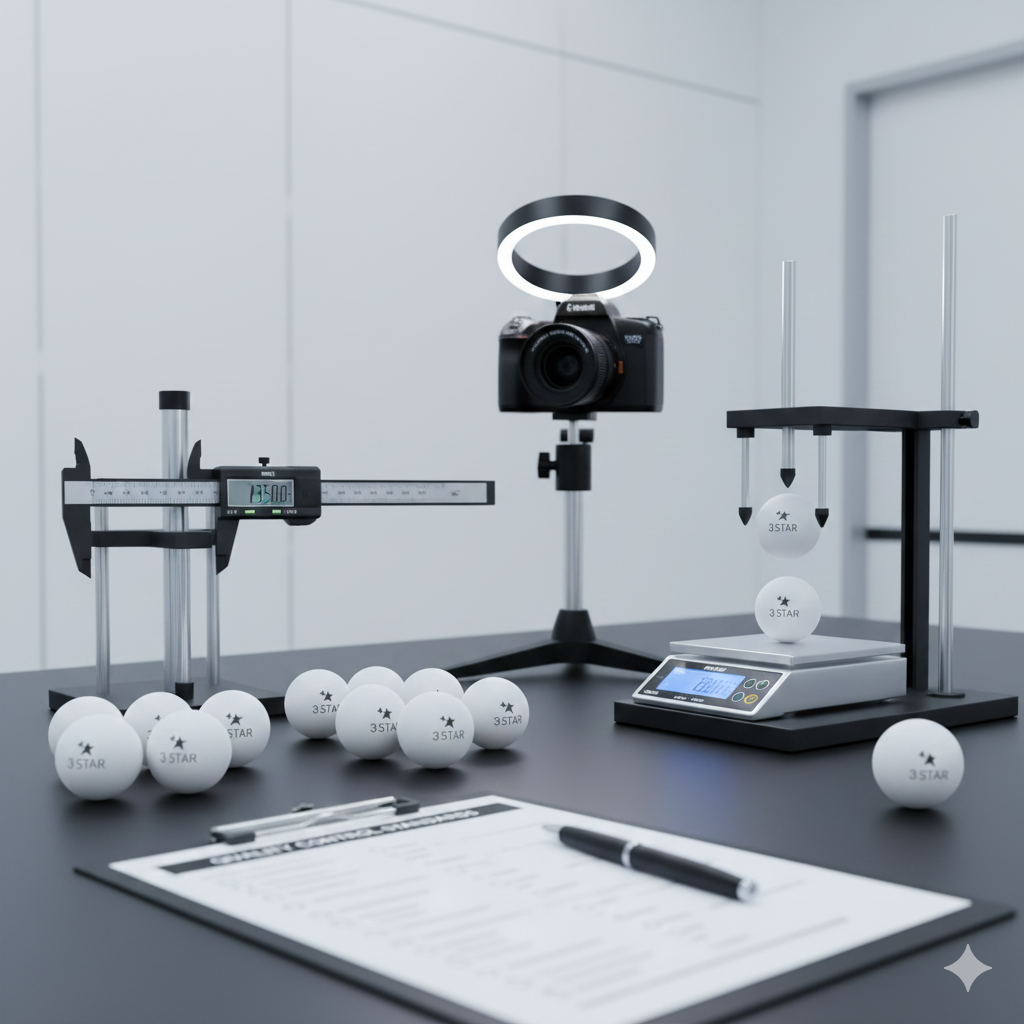
4. Precision Testing Adds to the Price
Manufacturers perform multiple tests on premium TT balls:
- Roundness test
- Weight test
- Bounce height test
- Hardness test
- Color uniformity test
- Spin response test
More testing = more quality assurance = higher price.
That’s why 3-star and ITTF-approved balls cost more.
5. ITTF Approval Fees & Standards
To get the ITTF stamp, manufacturers must:
- Perform strict quality checks
- Pay certification fees
- Maintain consistent production quality
This increases the ball’s overall market price, but ensures top-level performance.
6. Brand Reputation & Manufacturing Technology
Well-known brands invest heavily in:
✔ advanced molding machines
✔ durability improvement technology
✔ strict quality control
This leads to higher pricing but far better consistency, especially for competitive play.
7. Packaging & Bulk Options
Buying TT balls in:
- Single packs is costlier
- Dozen packs offer better value
- Bulk boxes (24/48/72 pcs) significantly reduce per-ball price
Premium packaging (like protective boxes) also raises cost slightly.
8. Who Should Choose What? (Quick Guide)
✔ Beginners
Go for 1-star or basic training balls—affordable & durable.
✔ Clubs / Coaching
Use 2-star or mid-range balls for everyday practice.
✔ Tournament Players
Choose 3-star ITTF-approved balls for ultimate performance.
Conclusion
The price of a TT ball is not random—it’s based on:
- Material quality
- Manufacturing technology
- Seam vs seamless design
- Intensity of quality tests
- Star rating
- ITTF approval
- Brand reputation
If you want budget-friendly training balls or high-performance tournament balls, always check the star rating and build quality before buying.
Recent Posts
-
 KX-10008 Table Tennis Table (Club Series) 30 Mar, 2026
 -
-

-


Comments
No comment yet.